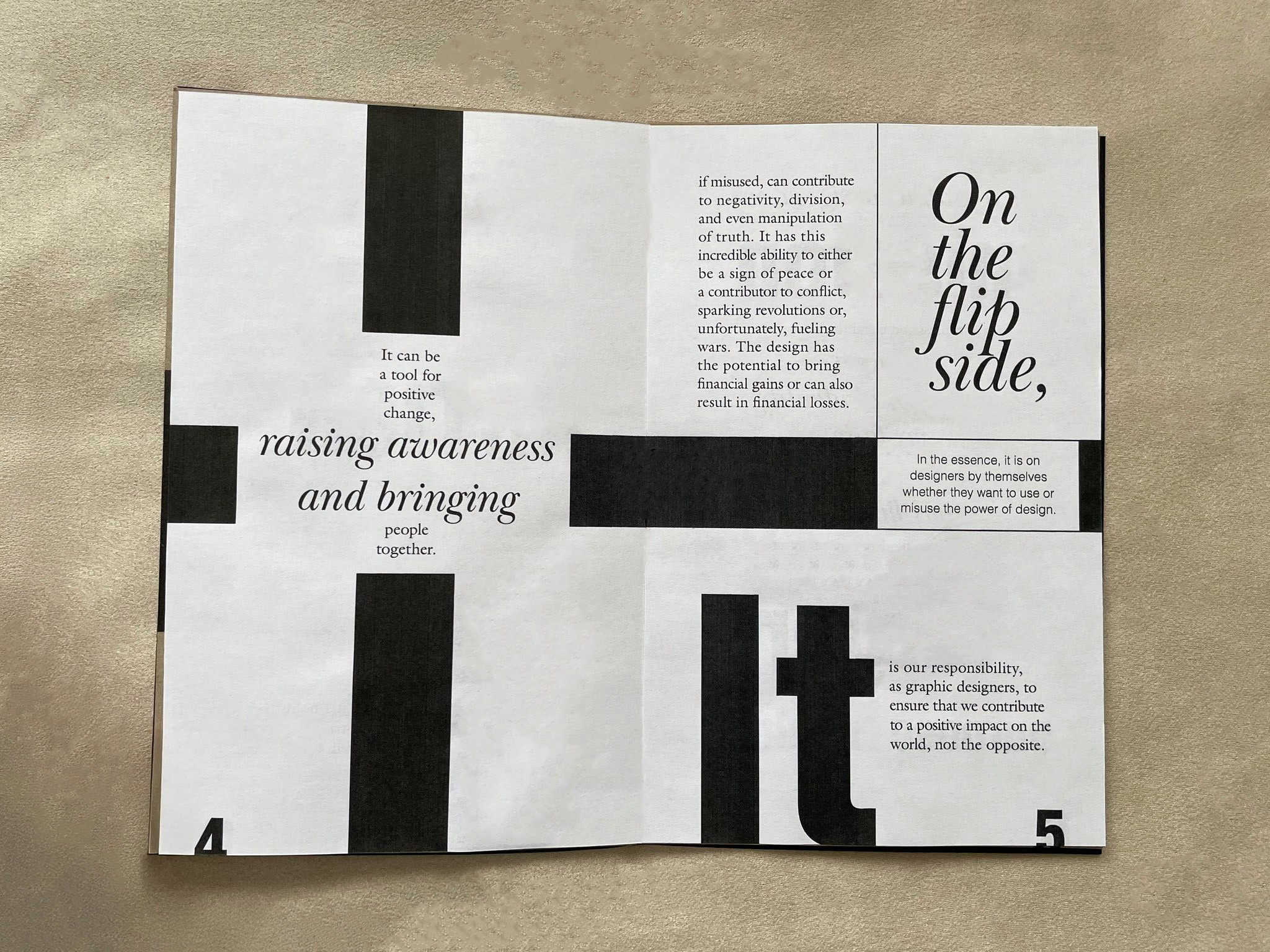
This graphic design manifesto advocates for using design as a tool for positive change, not just for commercial gain. It emphasizes the responsibility designers have to raise awareness, support communities, and communicate meaningful messages that go beyond surface-level aesthetics.
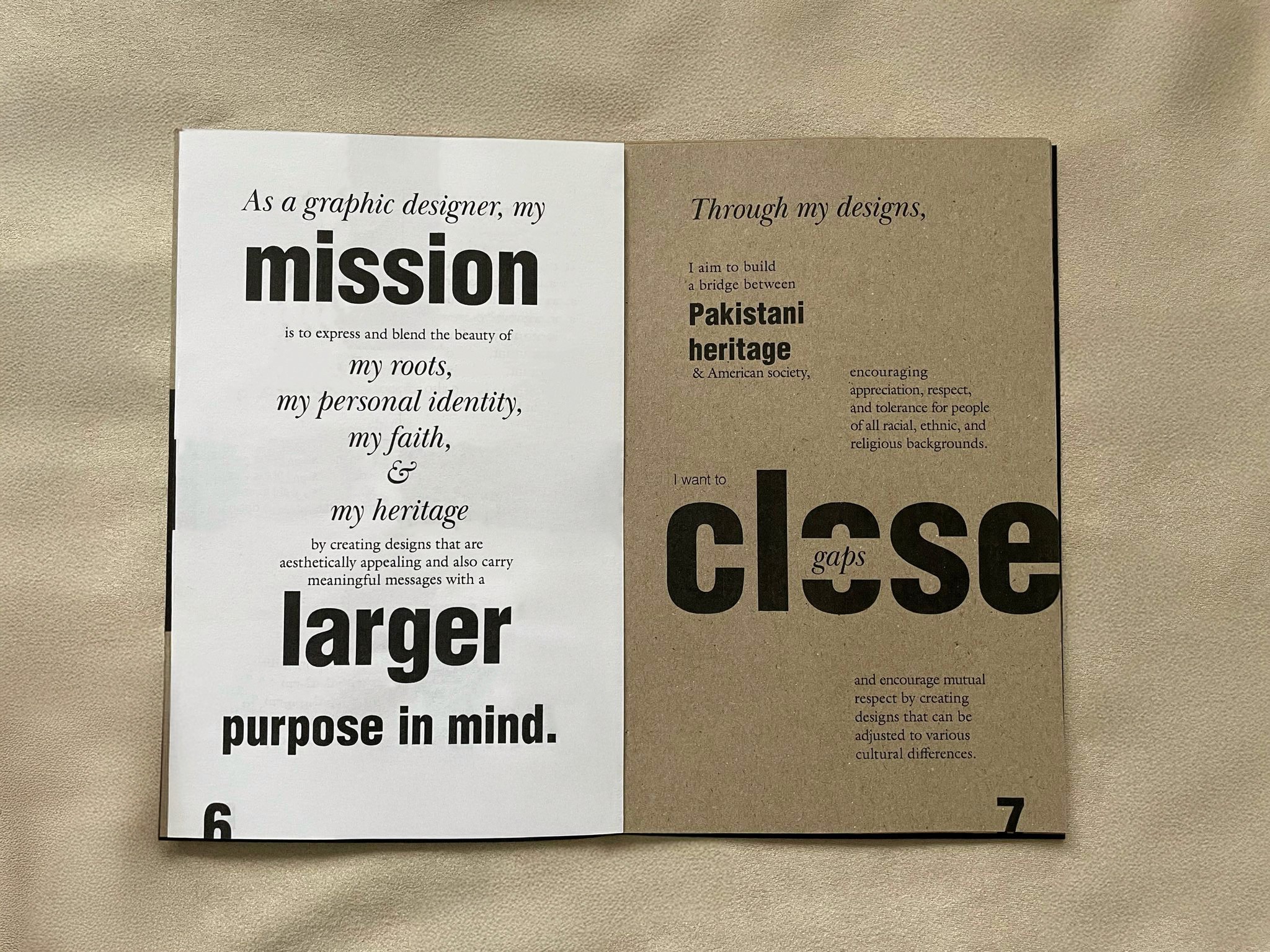
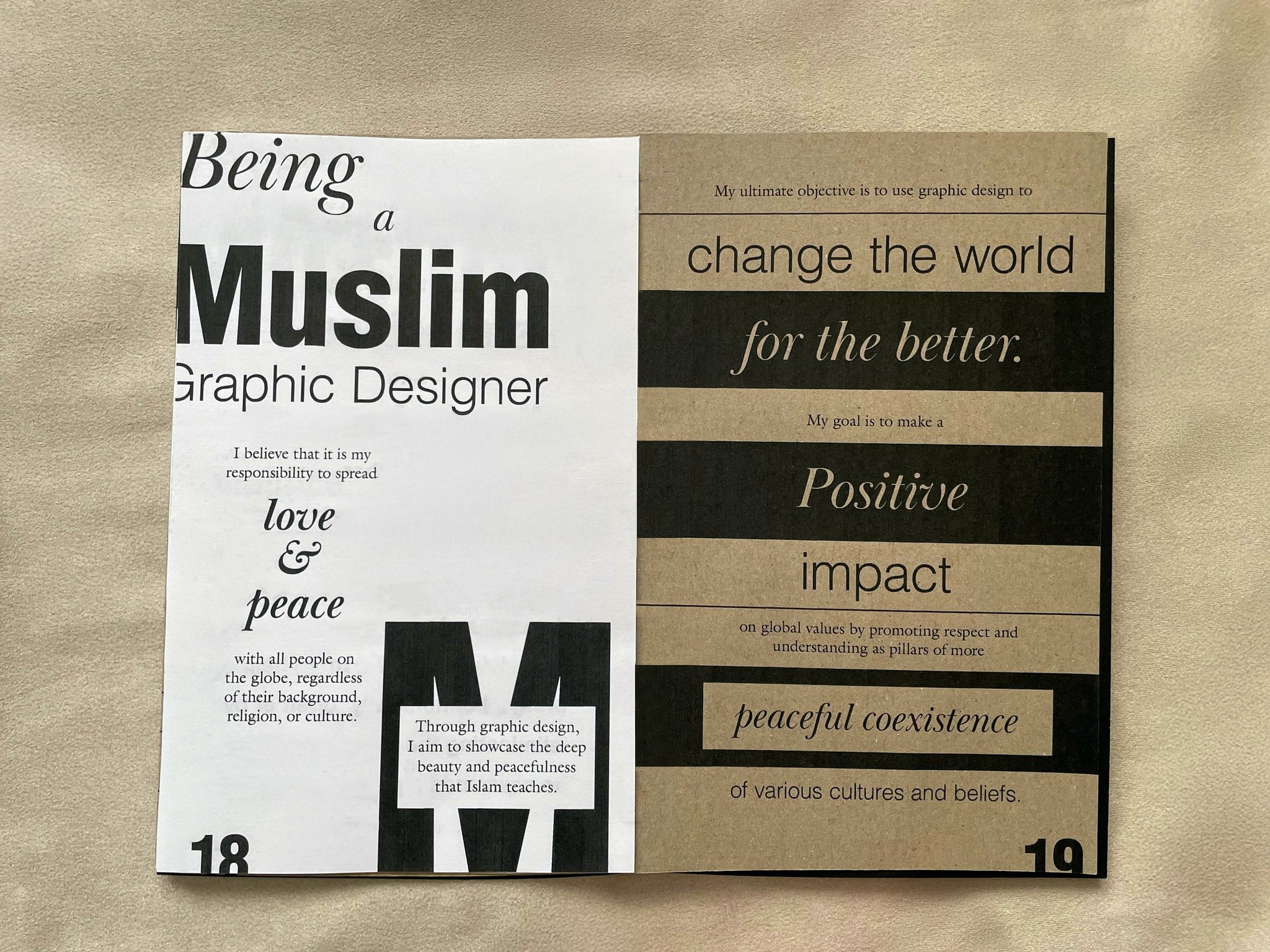
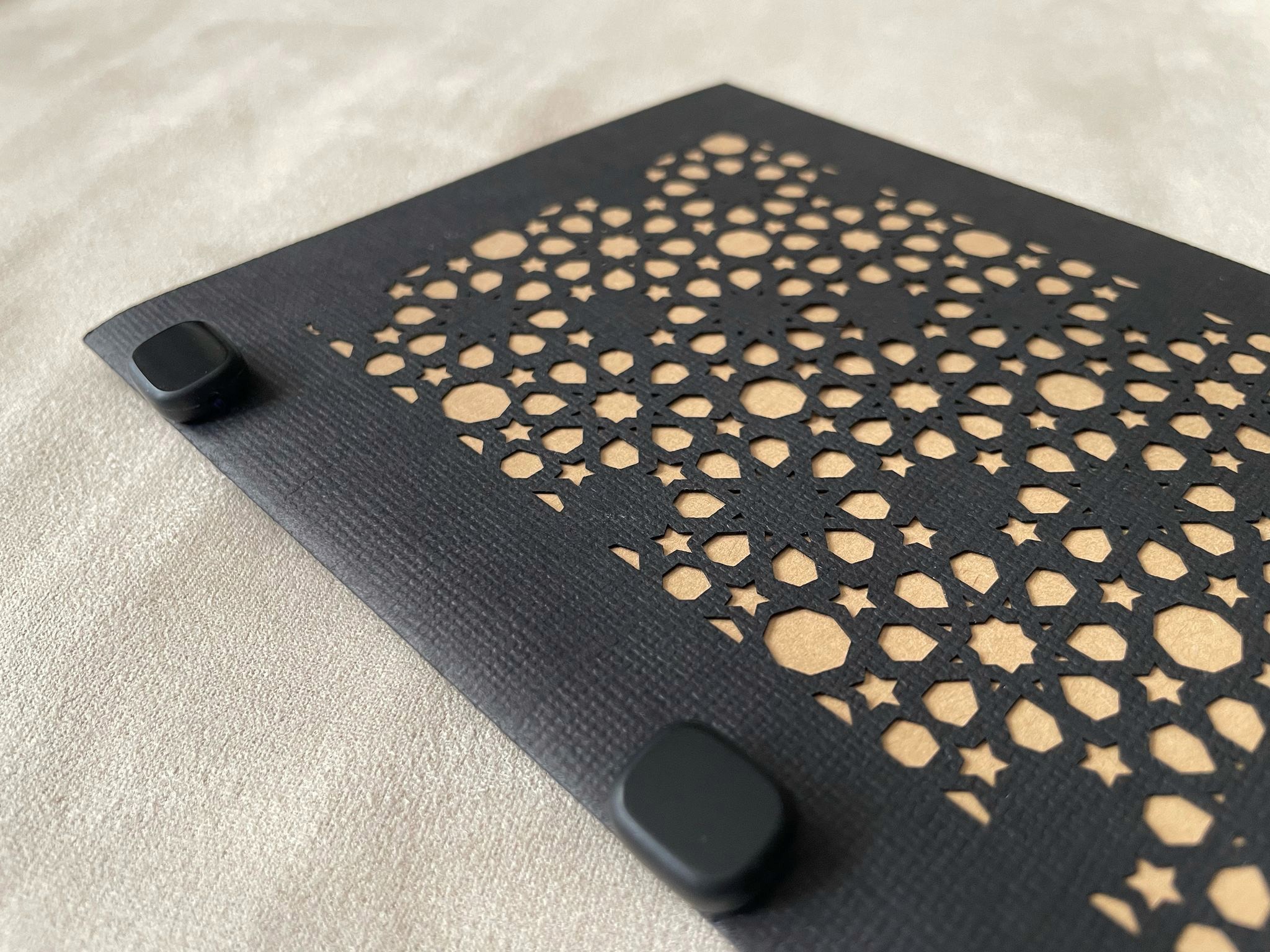
Rooted in the intersection of Pakistani culture and Islamic faith, the manifesto explores how graphic design can bridge cultural gaps, challenge stereotypes, and promote empathy. Inspired by artists who use their work to celebrate identity and faith, this project encourages the use of design as a form of visual storytelling that connects, educates, and unites.
Design holds the power to shape perception. In a world where misinformation and stereotypes often dominate narratives, especially about Muslims and South Asian communities, this manifesto positions design as a tool to reclaim and reshape those stories. Visual communication has the unique ability to simplify complex ideas, humanize misunderstood identities, and create entry points for dialogue across cultures. Through intentional design choices, from type to color to symbolism, this work advocates for truth, representation, and dignity.
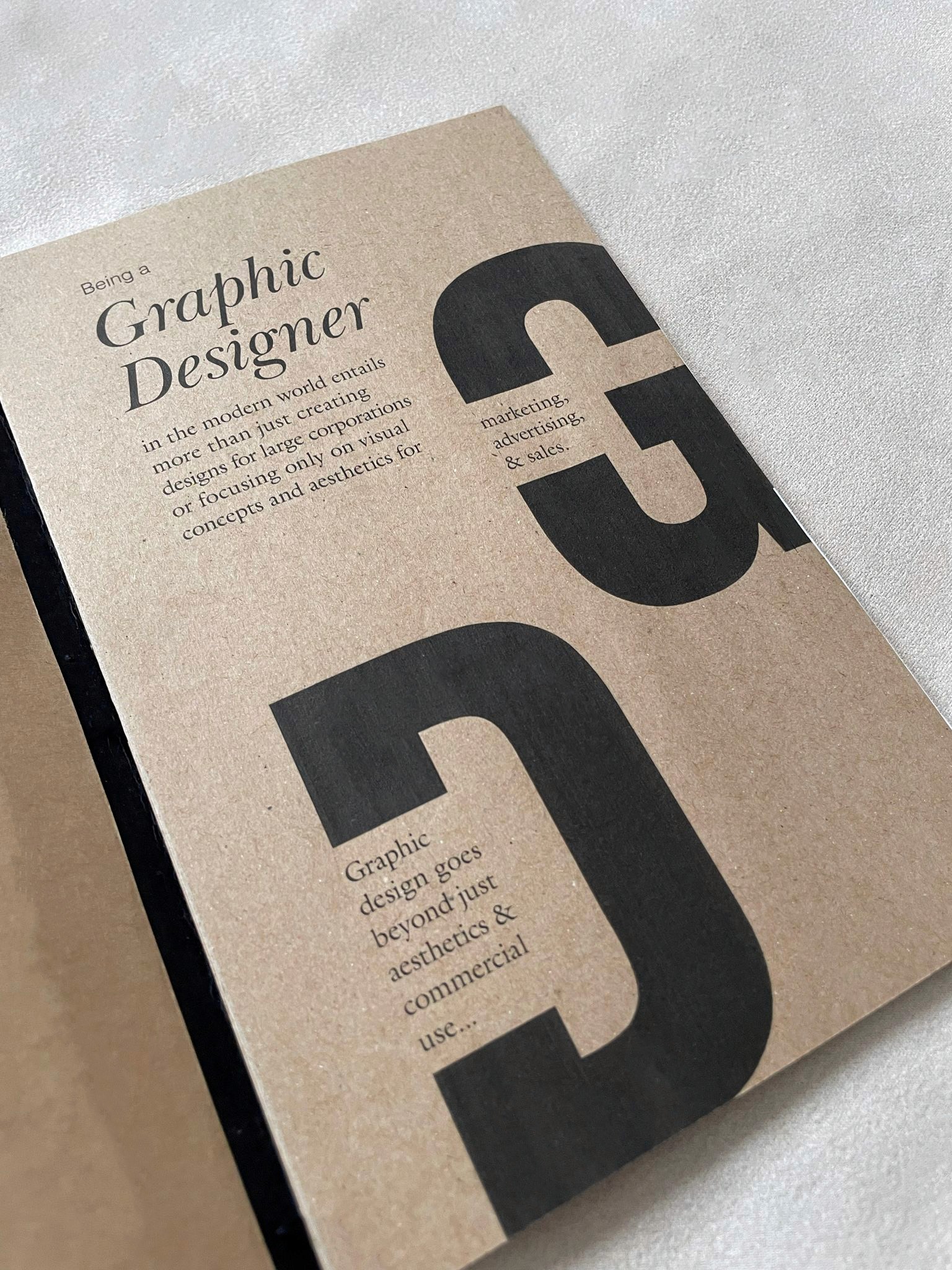
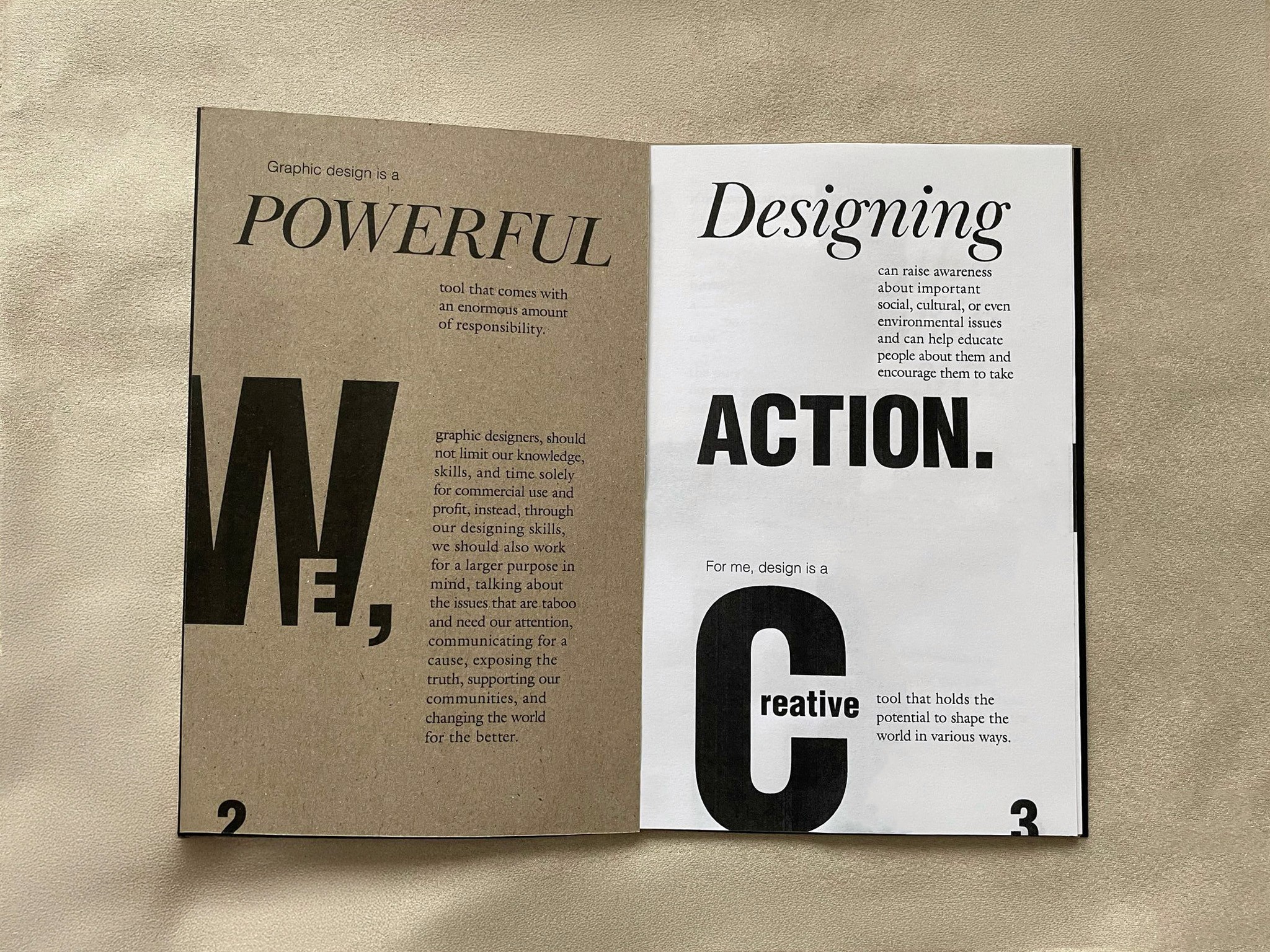
This booklet reflects a belief that design is not just what we make, but why we make it. It is a reminder that culture, faith, and heritage are not separate from design; they are part of it. Whether telling stories or addressing global issues, design becomes a bridge between people. With this manifesto, the goal is to inspire other designers to think beyond trends and tools and instead design with clarity, purpose, and heart.